
Part 2: How ERP Actually Works?
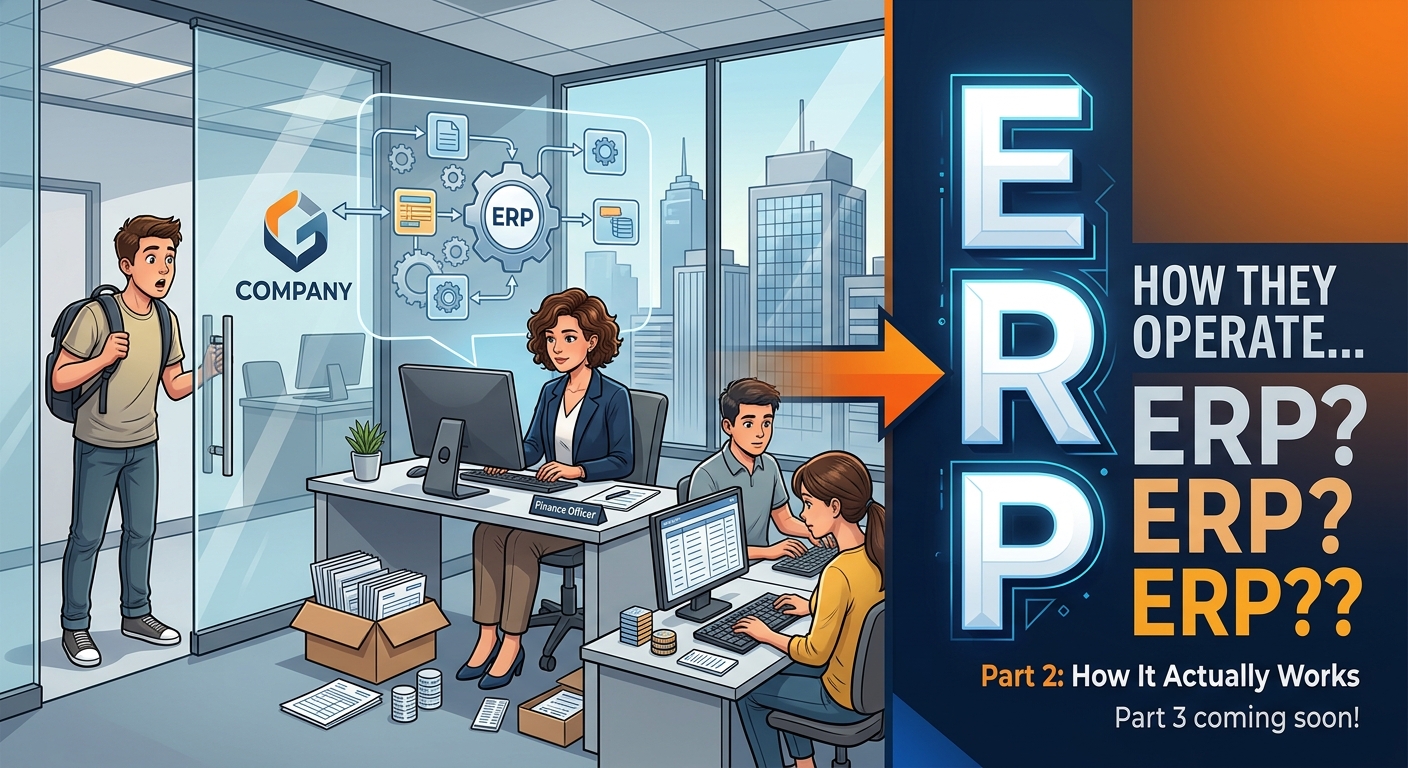
In my previous post, I shared how my friend and I walked into our internship expecting a room full of software engineers—only to find an entire company run by one finance officer and a couple of data encoders, yet delivering huge enterprise projects.
So, how were they pulling this off without writing traditional code?
It turns out, ERP systems are just a whole different world of software development. Nowadays, coding from scratch is becoming risky, especially for general-purpose software that needs to handle a massive volume of transactions.
The goal of an ERP is to build something so complete and well-organized that anyone can use it like a piece of cake.
There are a lot of major ERPs out there—Odoo, SAP, ERPNext, and so on. If you need software to manage an entire enterprise, these platforms already have the foundation built.
To continue with our story:
everything we did was entirely UI-driven. Creating database tables, setting up relationships between them—all of it was done in minutes without writing a single line of code. But the most astonishing part was that you define the UI right inside the table setup itself! While it follows certain layout rules, it still gives you total control over sections, column structures, and even embedded HTML fields so you can customize pages however you want.
Once you create a table, everything is instantly ready. You can create, edit, and delete records right away because all the interfaces, permissions, and backend routes are generated automatically. We started by configuring these systems to handle the massive streams of documents companies needed to process.
The only time real coding came into play was for client-specific requests, like custom document print formats—and even then, built-in drag-and-drop tools handled most of it. Almost everything was completely no-code.
What ERP platforms actually do is spend 10 to 15 years perfecting a system that works for almost any business, encompassing every department from inventory control to finance.
Using an ERP saves you so much. Time is the obvious one, but the real game-changers are security and performance. Building complex software from scratch leaves you open to bugs, security flaws, and speed issues, but an ERP solves those out of the box. And the best part? You can still easily extend it and make your own custom modifications whenever you need.
....to be continued.
Big Love
Comments · 0
Be the first to comment.